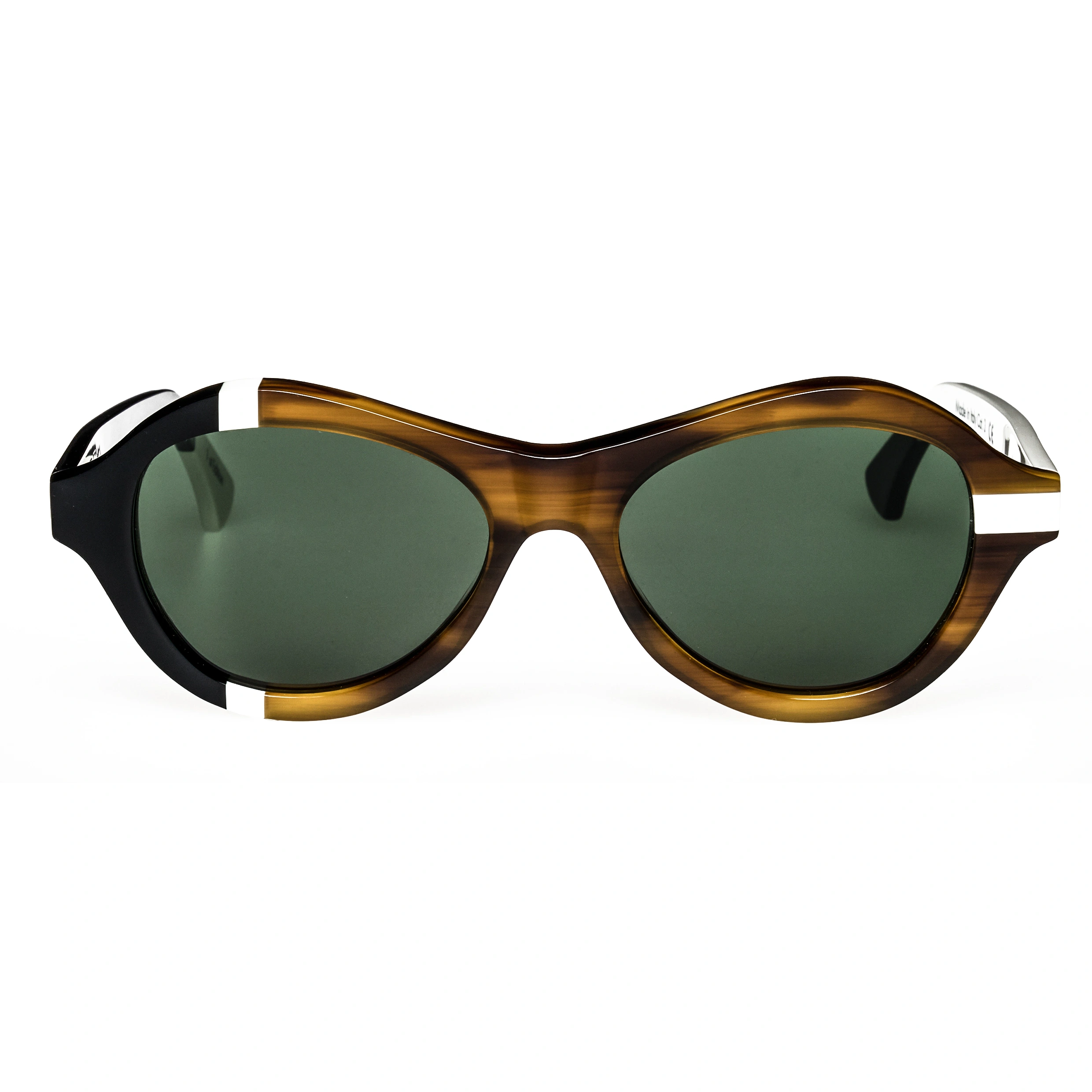


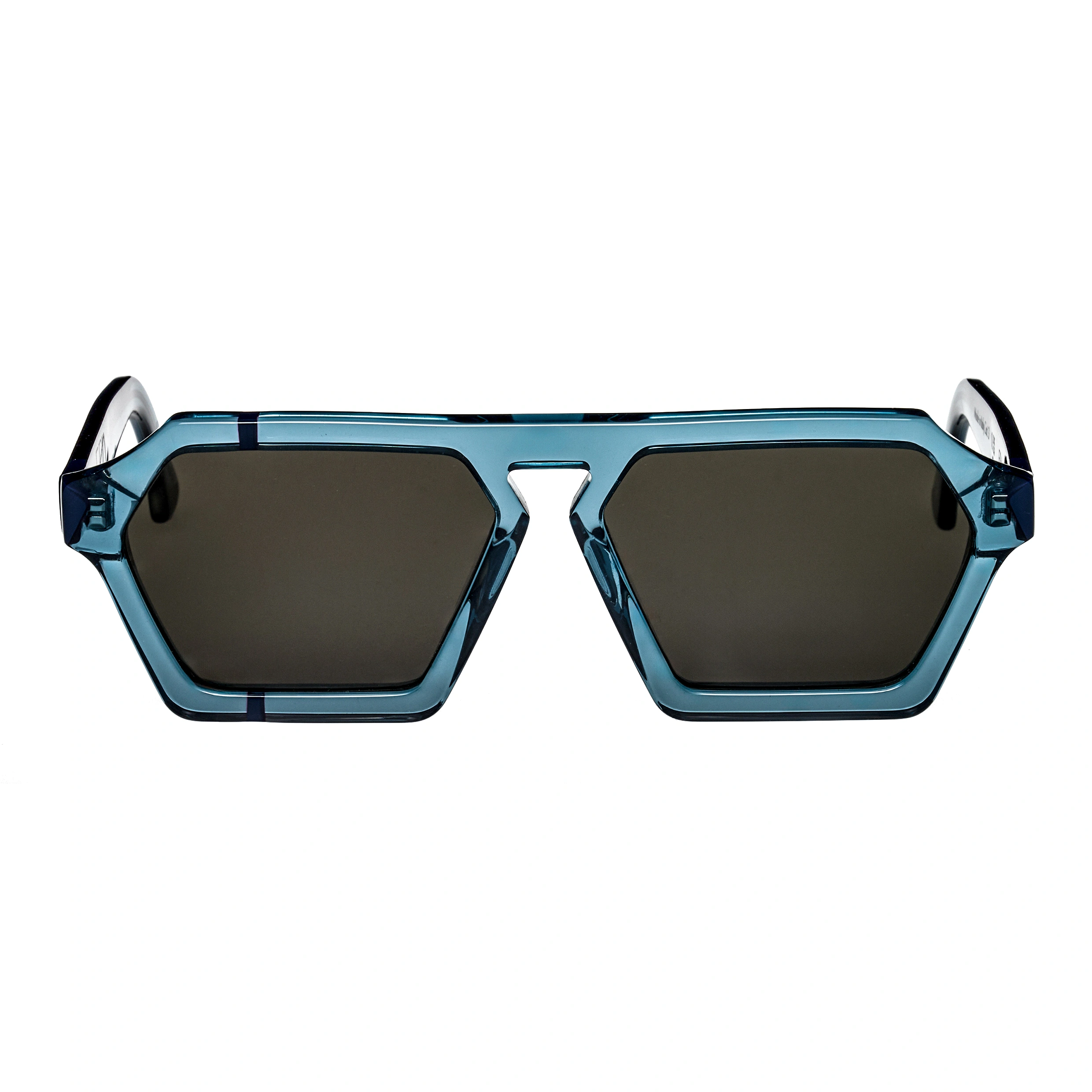
Ffin MOD frame is inspired by the British Mod movement of the 1960s, Italian Lambretta scooters and the distinctive mirrors that became symbols of Mod style. For designer Anna Lewis, the frame is also deeply personal — inspired by her mother Rosemary, who was a young Mod and one of the few women of her generation to own her own scooter.
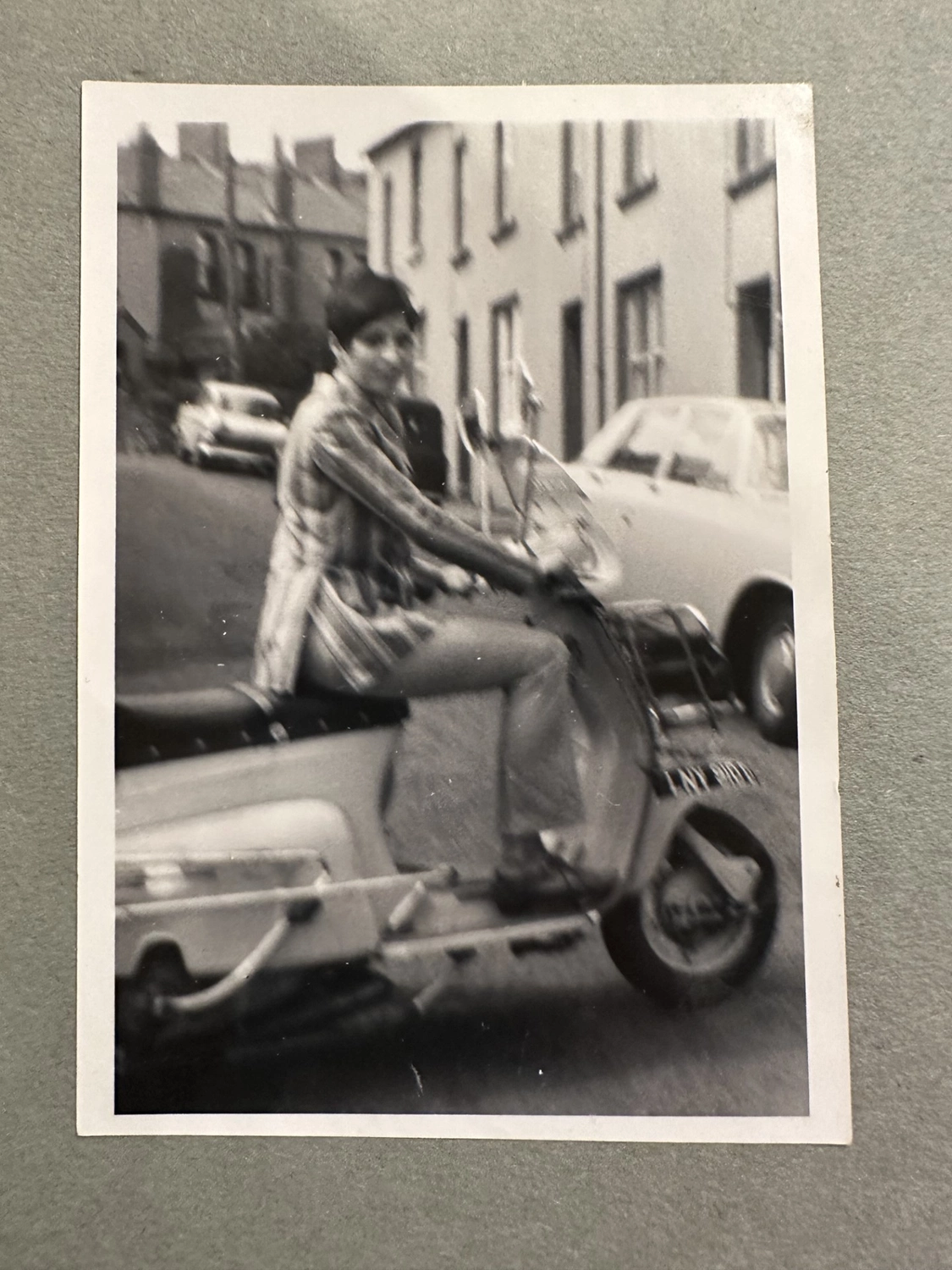
The MOD frame is probably one of the most personal designs in the Ffin collection because its story begins with my mum.
My mother was 18 in the 1960s. She was a Mod.
For me, the Mod movement represents that extraordinary moment when the teenager was really born — a generation beginning to move away from the world of their parents and create something of its own. The word Mod came from ‘modernist’, and the movement began in London in the late 1950s before spreading throughout Britain. It brought together music, fashion, youth culture, identity and a desire to be part of something new.
But when I talk to my mum about being a Mod, she doesn’t describe it like a history book. She remembers it as a revolution.
“It was a transition from childhood to adulthood. The teenager was born. It was revolutionary.”
The music, fashion and attitude of the Mods
Music was at the heart of Mod culture. American influences such as Elvis, soul, rhythm and blues and Motown were coming into Britain alongside a new generation of British bands. The Beatles, The Rolling Stones and, particularly, The Who became part of the soundtrack and visual identity of the era. The Who are particularly important to the Mod story. Their early music was closely associated with the movement, and they became one of the bands that came to embody its energy, attitude and rebellious spirit. I listen to The Who myself and we saw them play live together in recent years which brings our Mother Daughter Mod story full circle.
My mum remembers listening to music wherever she could..
“Pirate radio stations — playing pop music, evading the law. Listening to Radio Luxembourg under the blankets. Things just spread.”
And then there was the fashion.
It was incredibly British, growing out of London’s Carnaby Street. Biba, Mary Quant and Twiggy became symbols of this new visual language. Sharp tailoring, short skirts, geometric shapes, androgynous haircuts by Vidal Sassoon and an attitude that said you didn’t have to dress or behave like the generation before you. It is described as the ‘youthquake’.
Mary Quant was particularly important in defining the new female Mod look. Her miniskirts and bold approach to fashion helped give young women a new visual language, while models such as Twiggy became icons of the era. Mum had a petrol blue Mary Quant PVC coat, held with a giant safety pin, which sadly was lost off the back of the Lambretta as she drove over the mountains of South Wales!
For young women like my mum, this time was about more than fashion. It was about identity.
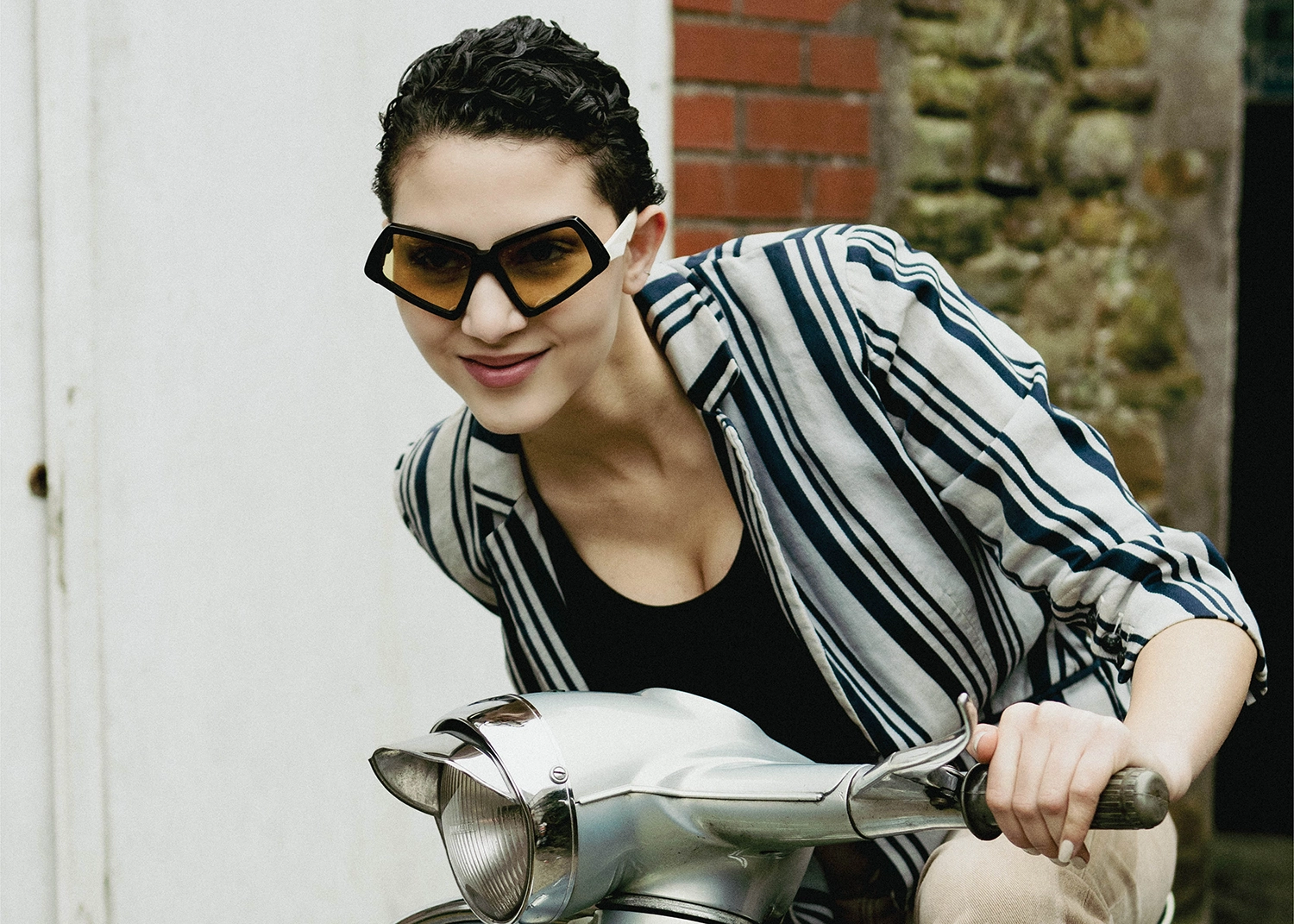
One of the things that fascinates me most about my mum’s story is that she owned her own scooter. She was one of very few young women at the time to do so.
The Mod scene gave young women an unusual degree of visibility and autonomy. Female Mods could be stylish, independent and androgynous — wearing short hair, trousers and shirts, or embracing the new miniskirts and fashions of the period. Fashion became a way of declaring who you were.
And then there were the scooters. The Italian scooter became one of the defining symbols of Mod culture. Lambrettas and Vespas weren’t simply practical transport. They became fashion accessories and an extension of the rider’s identity. Their clean, curved forms and gleaming chrome brought Italian design into the streets of Britain. Mods customised them with paint, chrome, luggage racks, crash bars, fog lights, flags, targets and, famously, huge numbers of mirrors. Some scooters had four mirrors, ten mirrors, even thirty. My mum even put her own name on the small windscreen of hers. She remembers the visual impact of it all:
“Groups on scooters, with excess mirrors, the parka jacket, the desert boots defining the looks.”
The scooter wasn’t just something you rode. It was something you looked at, it was part of the outfit. It was part of the attitude and it was unmistakably a British movement.
That is where the MOD frame begins. When designing the Ffin MOD frames, I became particularly interested in the mirrors that were added to Mod scooters. Their shapes were functional, but they also became highly decorative — repeated, polished, reflective forms that transformed the scooter into something much more expressive. I took that visual language and translated it into contemporary eyewear design to reframe the face.
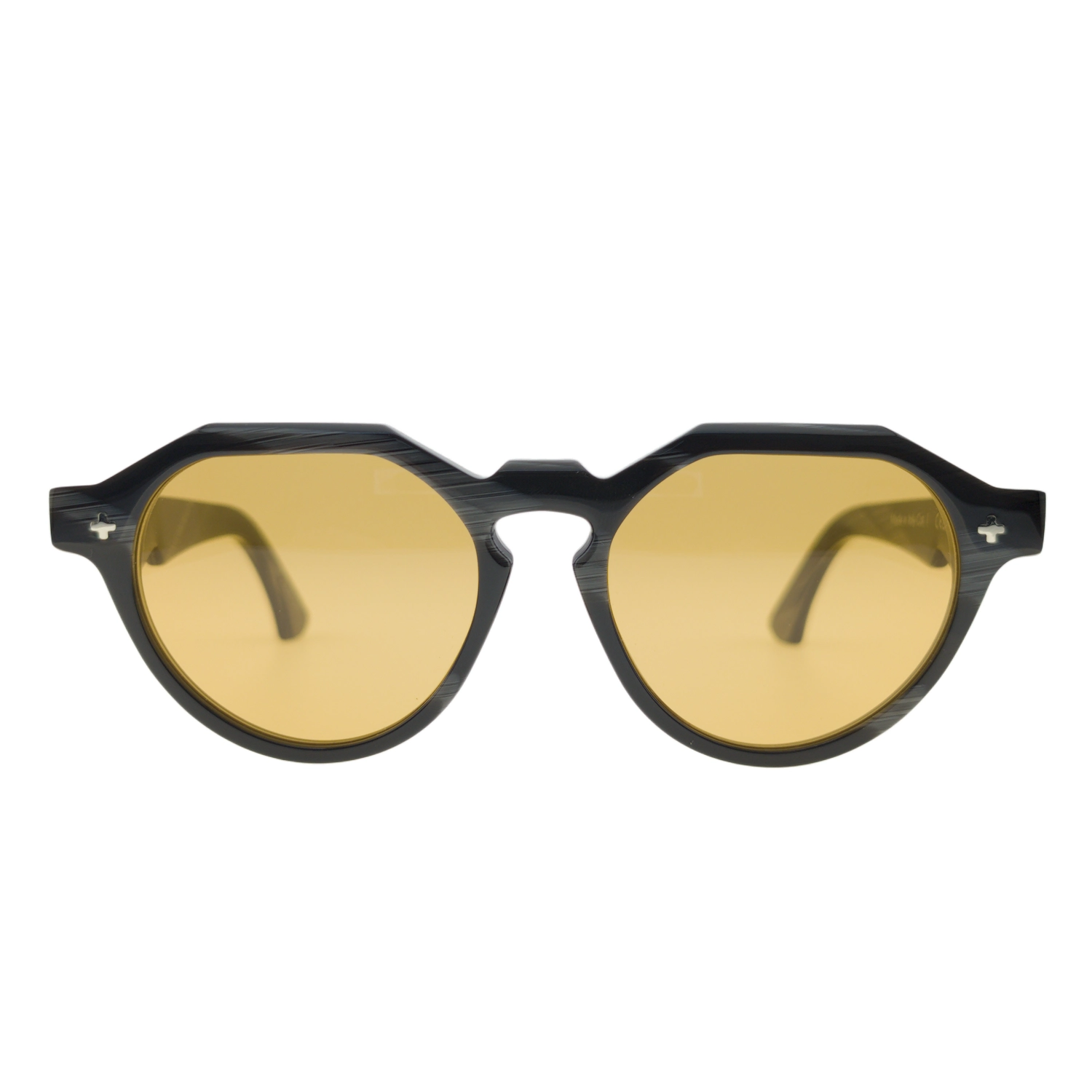
The MOD frame references the distinctive shape and attitude of a Lambretta mirror, but it isn’t a reproduction. It takes an element of 1960s Mod culture and reinterprets it as a modern pair of glasses. This is something I am interested in throughout the Ffin collection: taking personal and cultural references and translating them into wearable objects.
And the Italian connection for me, as the designer is important here. Ffin eyewear is made in Italy, so the MOD frame brings together two parts of the same design story — the Italian scooter that became an icon of British youth culture in the 1960s, and contemporary Italian eyewear craftsmanship designed here in Wales.
The Lambretta represented Italian style on the streets of Britain. The MOD frame carries that influence into eyewear.

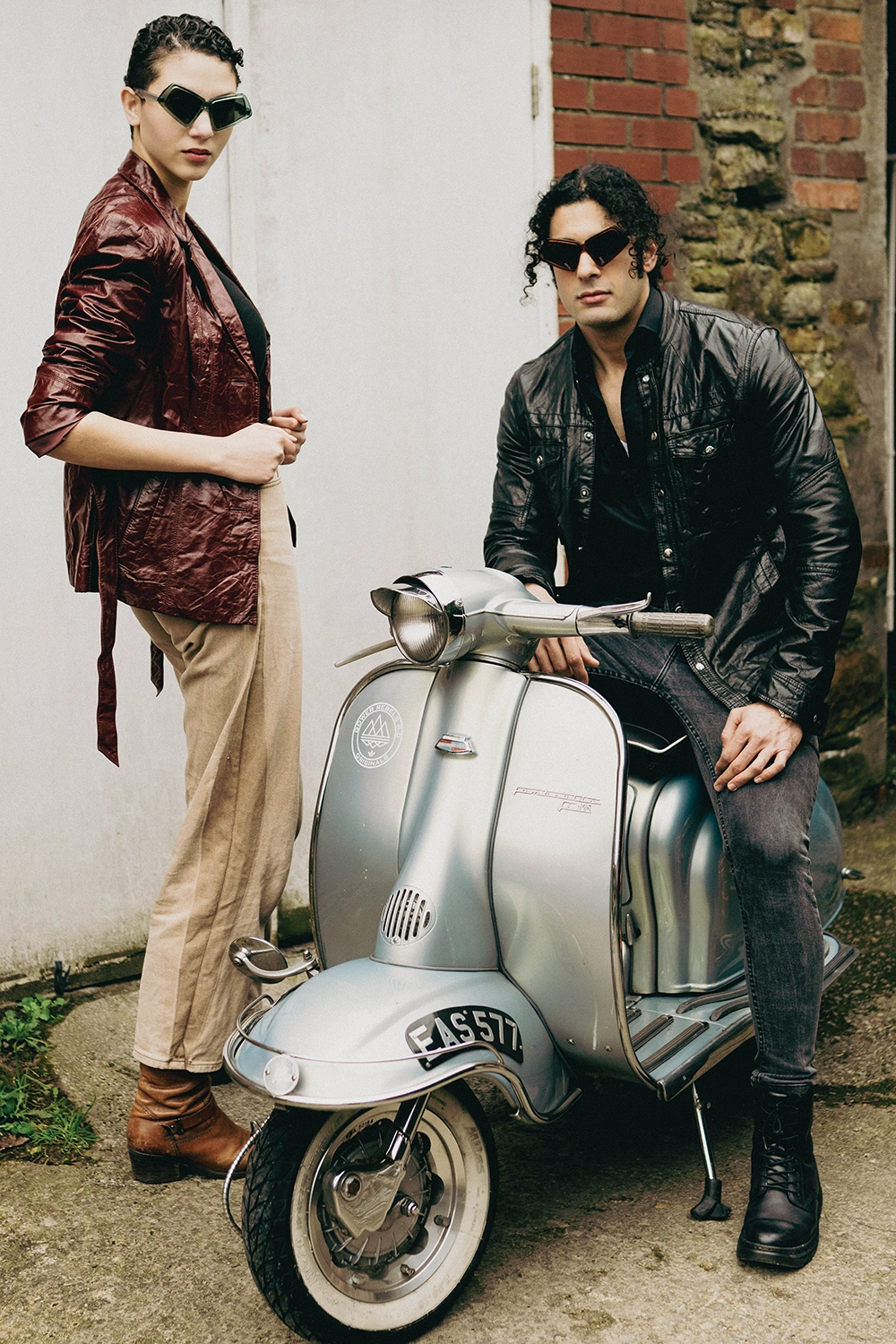
The scooters also became part of the rebellion. Mods and Rockers represented opposing ideas of youth culture — Mods with their Italian scooters, fashion and music, against Rockers with their motorbikes, leather jackets and rock’n’roll. Their clashes became notorious and were later immortalised in The Who’s Quadrophenia.
But when my mum talks about being a Mod, what comes through most strongly isn’t the fighting. It’s the confidence.
“People followed the trends like sheep. Mods were against the ordinary establishment.”
And then, with the confidence of an 18-year-old on her scooter:
“A Mod is fashionable, ‘with it’, edgy, in with the in crowd. Because I’m part of a revolution. I’m on top form. I’m the bee’s knees. I am a Mod! I’m something, I’m special. Look at me on my scooter! Ha ha!”
That feeling of individuality is at the heart of the MOD eyewear design.
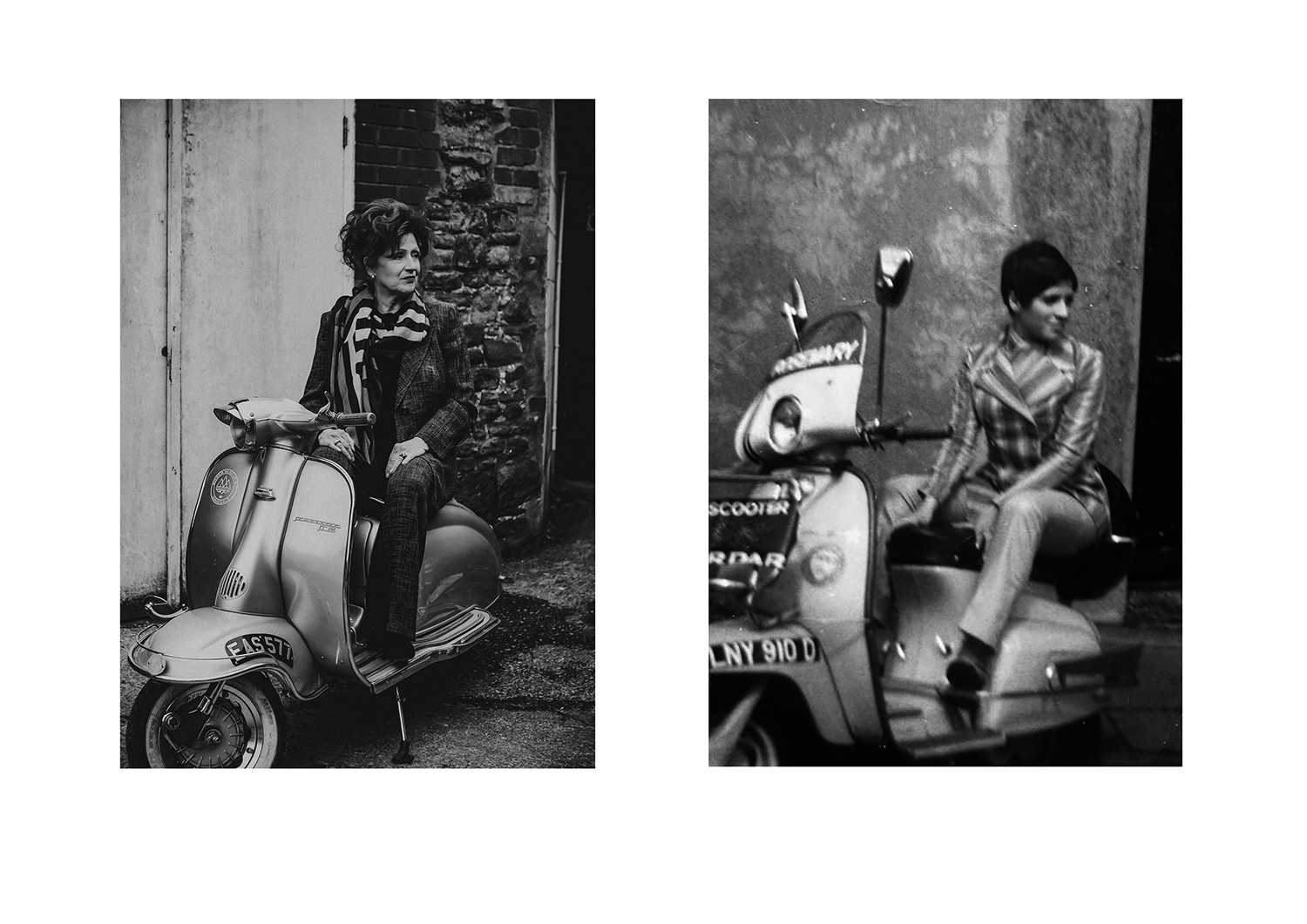
Growing up, I was fascinated by the photographs and stories of my Mum as a young woman. When I began developing Ffin, I found myself naturally looking backwards through my own maternal line, looking at the women and influences that had shaped me. So I decided to recreate one of her original photographs.
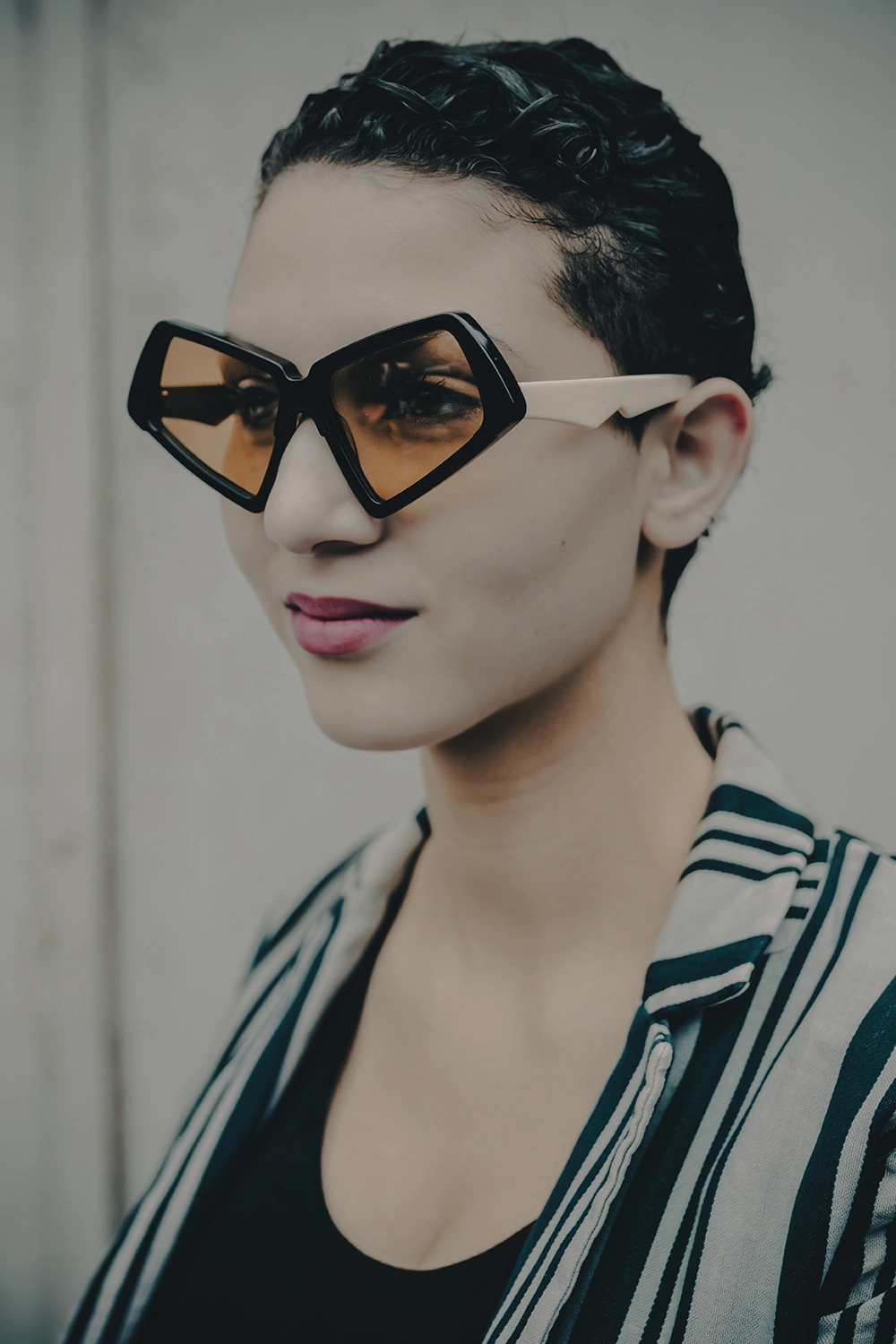
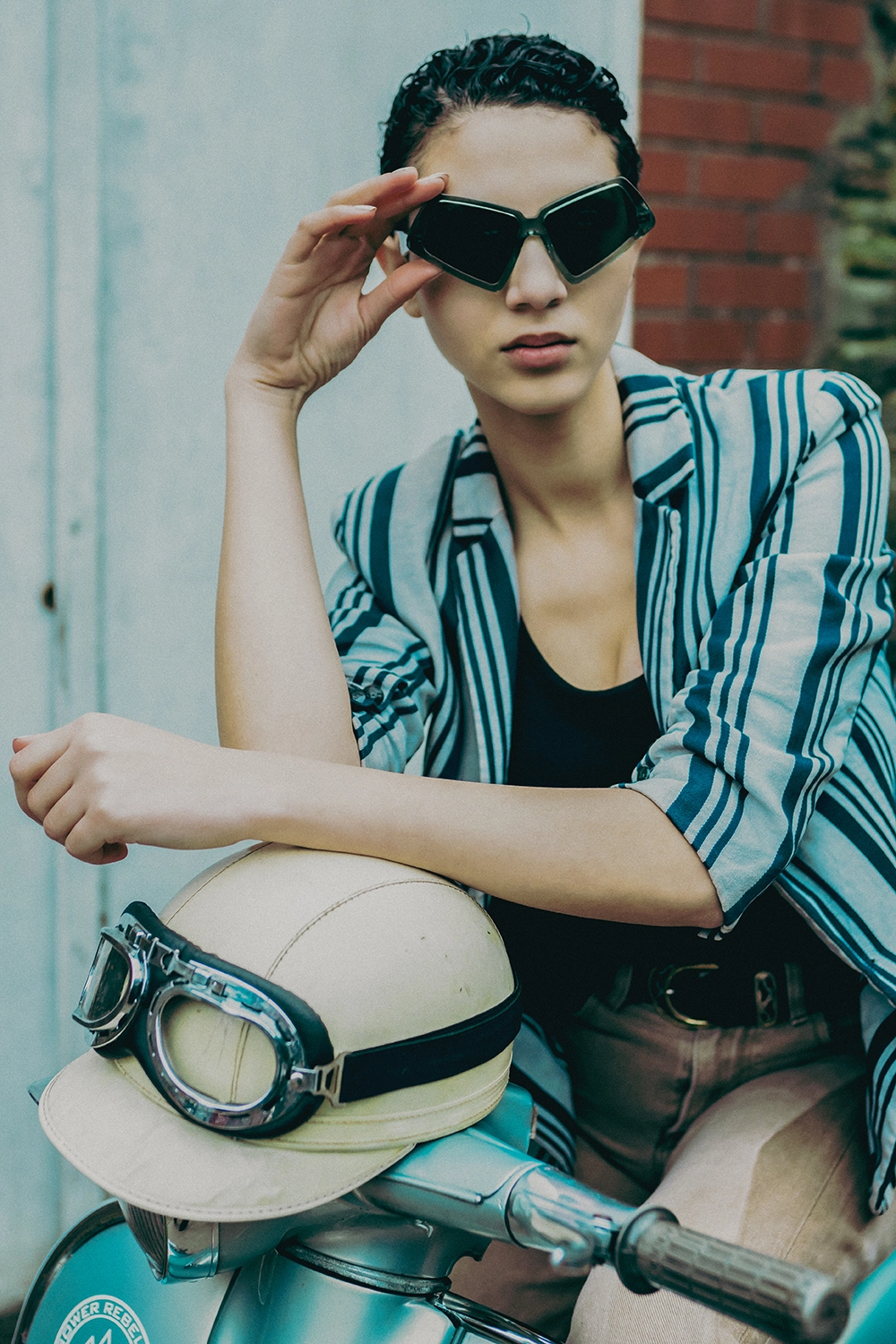
In the first image, she is around 18, with a short Greek goddess style haircut and a striped blazer circa 1965 sitting on her Lambretta on a Welsh Valley street in Aberdare. More than half a century later, at 76, she sat back down on a pale blue Lambretta, and the memories flooded back, this time wearing the Ffin MOD frame.
And she still had it.
Her style now completely different from the young woman in the original photograph, but somehow just as striking. I love that we didn’t try to make her look 18 again. We recreated the image because I wanted to show the connection between those two women. The young Mod who was discovering her independence and the woman she became, carrying that same sense of individuality and absolute style with her. The two photographs are separated by almost sixty years, but the attitude has survived.
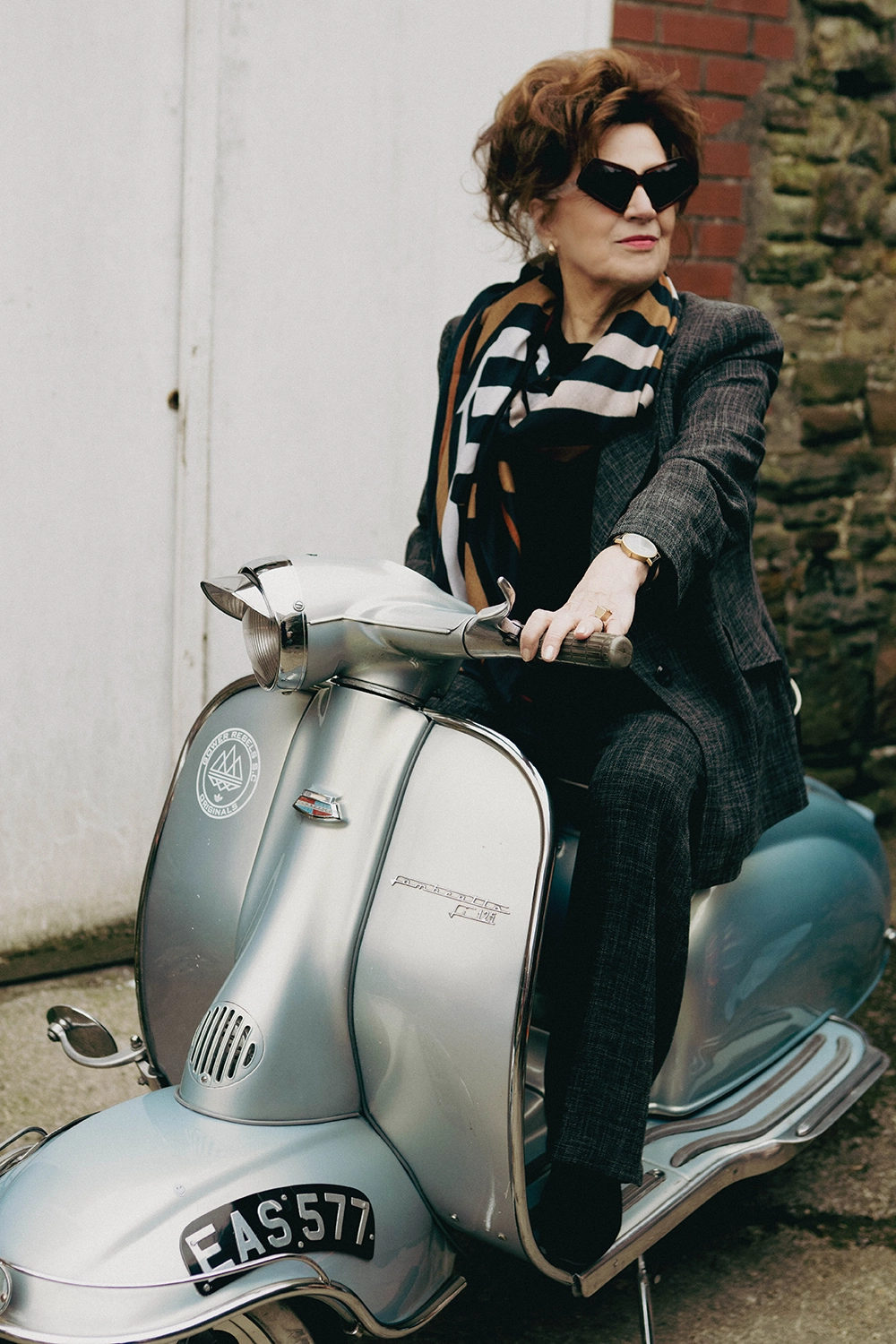
The original Mod movement was about being modern, fashionable, sharp, individual and ‘with it’. It was a rejection of the ordinary establishment and a celebration of creating your own identity. That spirit still feels relevant to me.
For Ffin, the MOD frame isn’t simply 1960s-inspired eyewear or a nostalgic reference to vintage British fashion. It is a contemporary interpretation of Mod design — bringing together British youth culture, Italian scooter design, 1960s fashion and music, and the expressive possibilities of modern eyewear.
And, of course, it is also my mum’s story ( The influence of the maternal line). She was a rebel at 18. At 76, she still is.
Perhaps that is the most Mod thing of all.

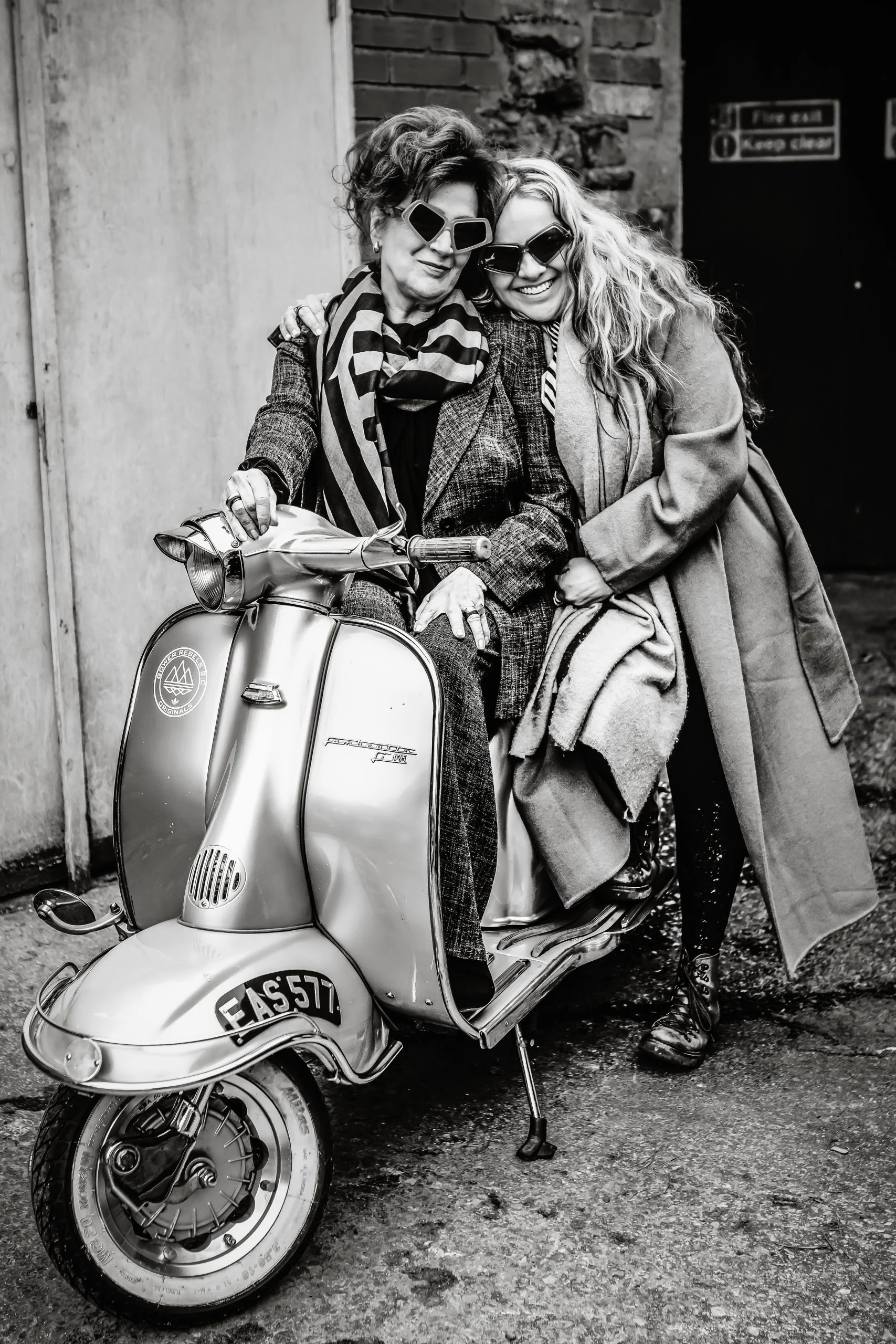
An original Mod 1960s, Still iconic in 2026, Ffin MOD muse.
Get news about new collections, events and stockists.